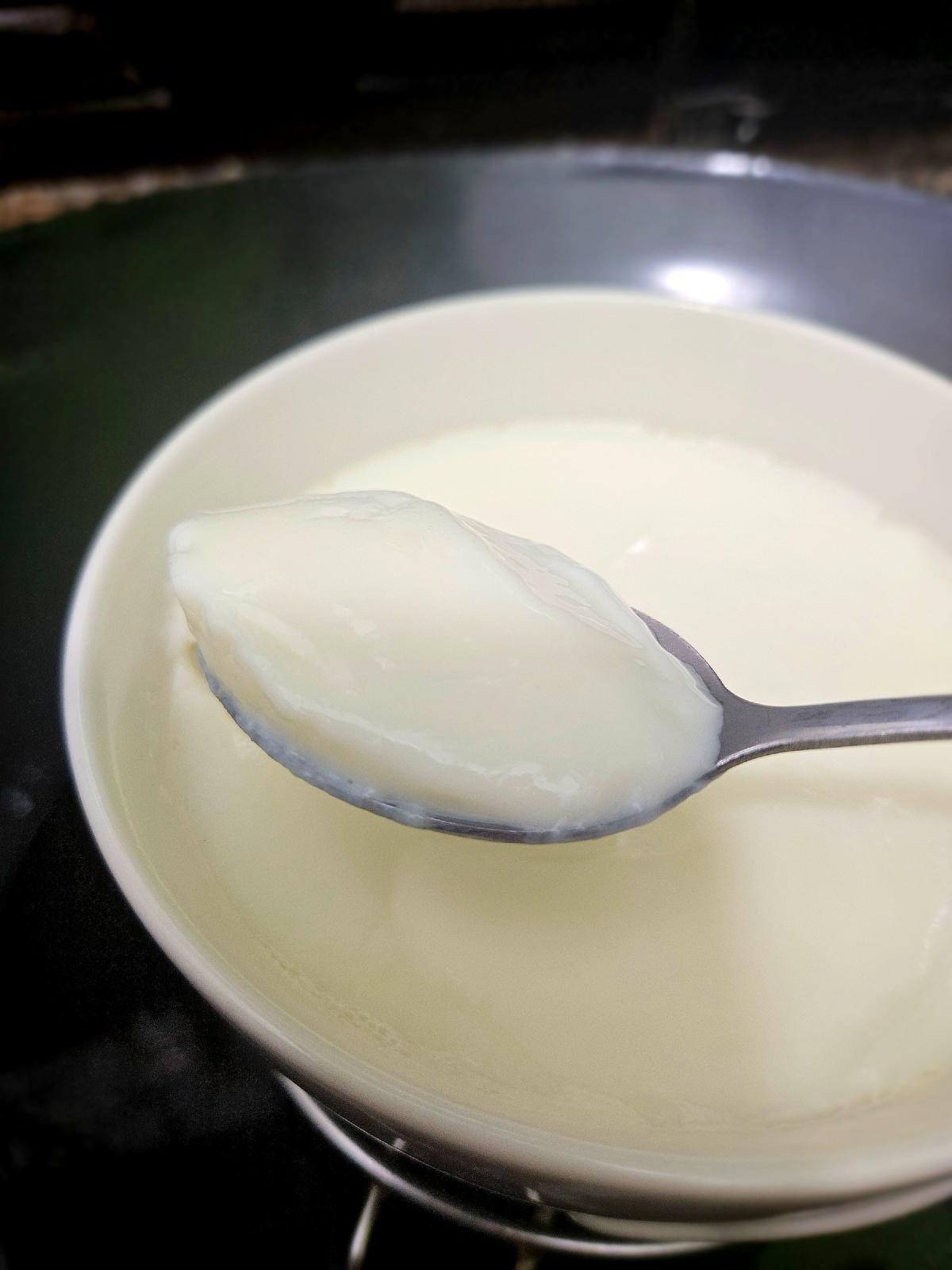
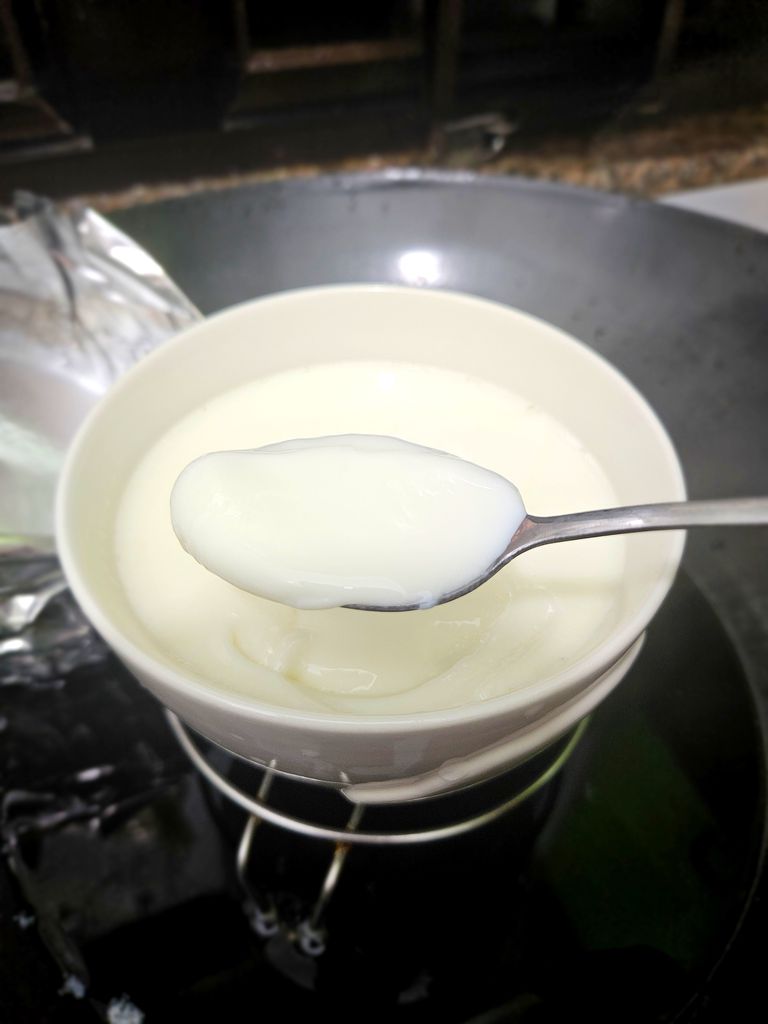
Cantonese Steamed Milk Pudding with Egg White (鮮奶燉蛋白) is one of the easiest desserts to make, that is silky, glossy, and spoon-cut smooth.
And it is one of the most fail‑proof and best ways to use up leftover egg whites, especially when you’ve just made egg‑yolk‑only desserts, like my no-churn vanilla ice cream. With only 3‑ingredient dessert, milk, egg whites, and sugar, this Cantonese dessert turns surplus egg whites into a silky‑smooth, protein‑rich pudding that feels elegant but requires minimal effort, no baking, and no special equipment.
Perfectly smooth steamed milk pudding with egg white
Warm the milk with sugar until just dissolved. Remove from heat and allow it to cool.
Measure milk and sugar.Dissolved sugar in milk by warming it.
Why warm milk?
Warming helps dissolve sugar completely and reduces thermal shock to egg-white proteins. Boiling milk denatures proteins too aggressively, causing grainy texture later.
Gently Use chopsticks or a fork to cut through the egg whites. Do not whisk. Do not foam. Introducing air at this stage guarantees bubbles later, which become pores after steaming.
Gently breaking up egg whites
Pour milk into egg whites and stir slowly until just combined.
Combining egg whites with milk
Tip
Cool the milk to below 60 °C (ideally 45–55 °C) before mixing with the egg whites.
At this range, the milk is still warm enough to blend smoothly but cool enough that it won’t start cooking the egg white proteins, which begin to coagulate around 62–65 °C.
Practical home test: the milk should feel warm but comfortable to touch, not hot enough that you instinctively pull your finger away.
Strain the mixture through a fine sieve to removes chalazae (ropey egg structures), and eliminates micro bubbles
Straining the custardLook at the egg white that got strained out.
Remove surface Bubbles by tapping gently or skimming it off.
Skimming surface bubbles
Cover the bowl tightly with foil. When the steaming water comes to a full boil, carefully place the bowl inside and steam over medium heat for 12–15 minutes.
Steaming covered custard
Steaming Physics
Egg white proteins (ovalbumin) coagulate at ~62–70°C. Too hot → rapid contraction → water expulsion → honeycomb texture.
Turn off heat and let sit for 5 minutes inside the pot.
Carryover Coagulation
Residual steam finishes setting the center without overcooking the edges.
Enjoy right away, or chill in the refrigerator and serve cold later for an equally silky texture.
For a warming, lightly spicy variation, stir 2 tablespoons of fresh ginger juice into the strained milk-and–egg white mixture just before steaming. The ginger adds gentle heat and aroma while helping the custard set slightly firmer, making this version especially comforting in cooler weather.
A classic Cantonese steamed milk pudding made with egg whites.
Ingredients
Scale:
Units:
300 mlfull-fat fresh milk
60 gegg whites (from 2 eggs)
1 tbspsugar (adjust to taste)
Instructions
Add the sugar to the fresh milk, gently warm it in a pan, and stir slowly until fully dissolved. Heat only until just warm (about 70–80 °C), do not let it boil, then set aside to cool (below 60 °C, ideally 45–55 °C) slightly before using.
Place egg whites in a bowl and gently break them up with chopsticks or a fork. Do not whip or introduce air.
Pour the warm milk into the egg whites and stir slowly until just combined.
Strain the mixture through a fine sieve to remove bubbles and chalazae.
Pour the strained mixture into a heatproof bowl. Tap lightly and skim off remaining surface bubbles.
Cover tightly with foil.
Bring water to a full boil, then reduce to medium heat. Steam for 12–15 minutes.
Turn off heat and let the pudding rest inside the steamer for 5 minutes before removing.
Rate this recipe
loadingloading
Nutrition Facts
Servings 1 serving
Amount Per Serving
Calories165 kcal
% Daily Value *
Protein 6 g—
Sugars 17 g—
* Percent Daily Values are based on a 2,000 calorie diet. Your daily value may be higher or lower depending on your calorie needs.
Newsletter signup
Cook smarter, not harder 🧠🔥
Subscribe to get nerdy, science‑based tips and updates on how to improve your cooking.
Why does my pudding have bubbles or a honeycomb texture?
This happens when the mixture contains trapped air or is steamed at too high a temperature. Always strain, cover with foil, and steam over medium heat, never on a rolling boil.
Can I use low-fat milk?
You can, but the result will be less creamy and more brittle. Full-fat milk stabilizes the egg white protein network and produces a smoother custard.
Is this the same as double-skin milk (雙皮奶)?
No. Double-skin milk requires boiling milk and forming milk skin twice. This recipe focuses on egg-white protein coagulation instead.
Make this easy Cream Cheese Honey Glaze with real cream cheese tang and natural honey sweetness — no powdered sugar required. Perfect for drizzling over cinnamon rolls, pound cakes, carrot cake, or bundt cakes.
Pillowy cinnamon rolls made with a 50/50 blend of bread flour and all-purpose flour for the perfect balance of tall rise, chewy spirals, and soft texture. Includes a simple glaze honey cream cheese glaze.
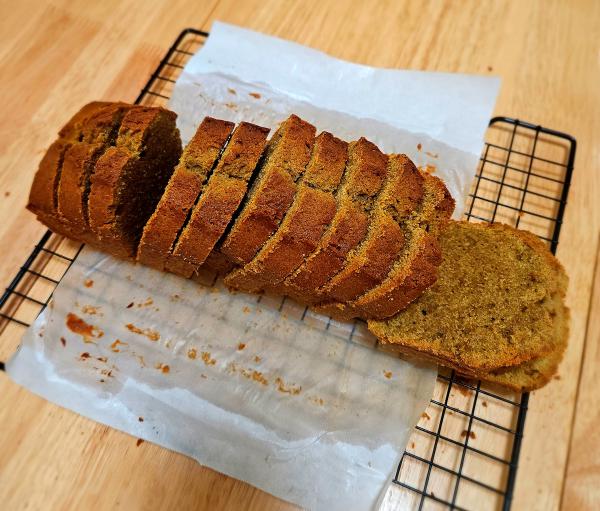
Bake a cozy Hōjicha Pound Cake with the warm, nutty, roasted aroma of Japanese Hōjicha tea. This science-based recipe uses sour cream and adjustable milk for extra moisture, delivering a tender, velvety crumb in a classic buttery loaf — perfect for tea time or gifting.