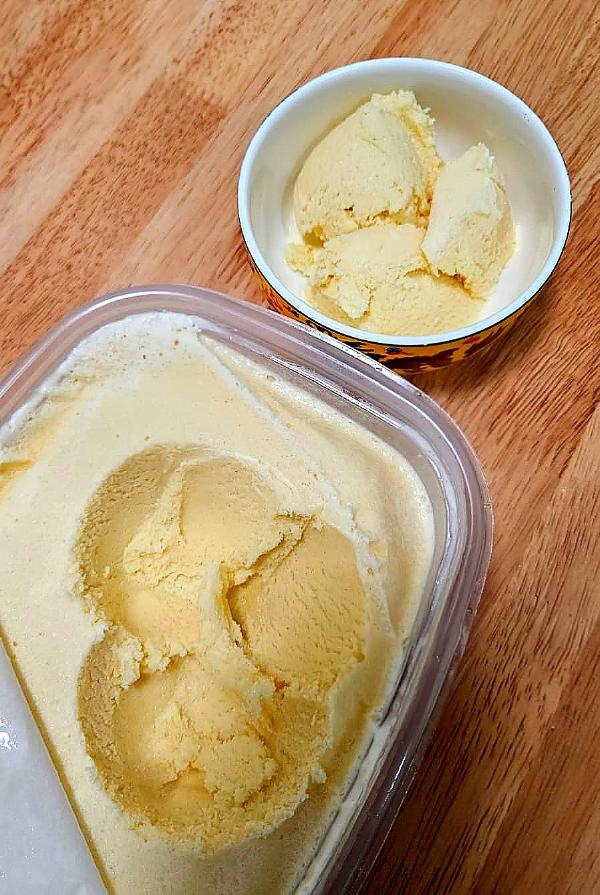

If you love bright, tropical flavors, this No-Churn Passion Fruit Ice Cream is a winner. It features real passion fruit pulp and seeds for intense aroma and tiny bursts of crunch, all wrapped in a creamy custard base sweetened with allulose.
No ice cream maker required, just freeze flat and blend in a food processor for a smooth, scoopable result. No condensed milk is used as well! We use allulose instead.

Why You’ll Love This Recipe#
- Real passion fruit flavor with pulp and seeds
- No ice cream maker needed
- Allulose sweetened give softer texture and lower glycemic impact
- Rich custard base for luxurious mouthfeel
- Make-ahead friendly
Ingredients#

- Whole milk & double cream: Form the rich, creamy base.
- Passion fruit pulp with seeds: Delivers bright, tangy tropical flavor and texture.
- Allulose: Provides sweetness with excellent freezing properties and balances the acidity.
- Egg yolks: Create a smooth, stable custard that improves texture.
- Salt & vanilla: Enhance and round out the flavor.
Step-by-Step (with Photos)#
Combine milk, cream, salt, and vanilla in a saucepan. Heat gently until steaming in the edge (do not boil).
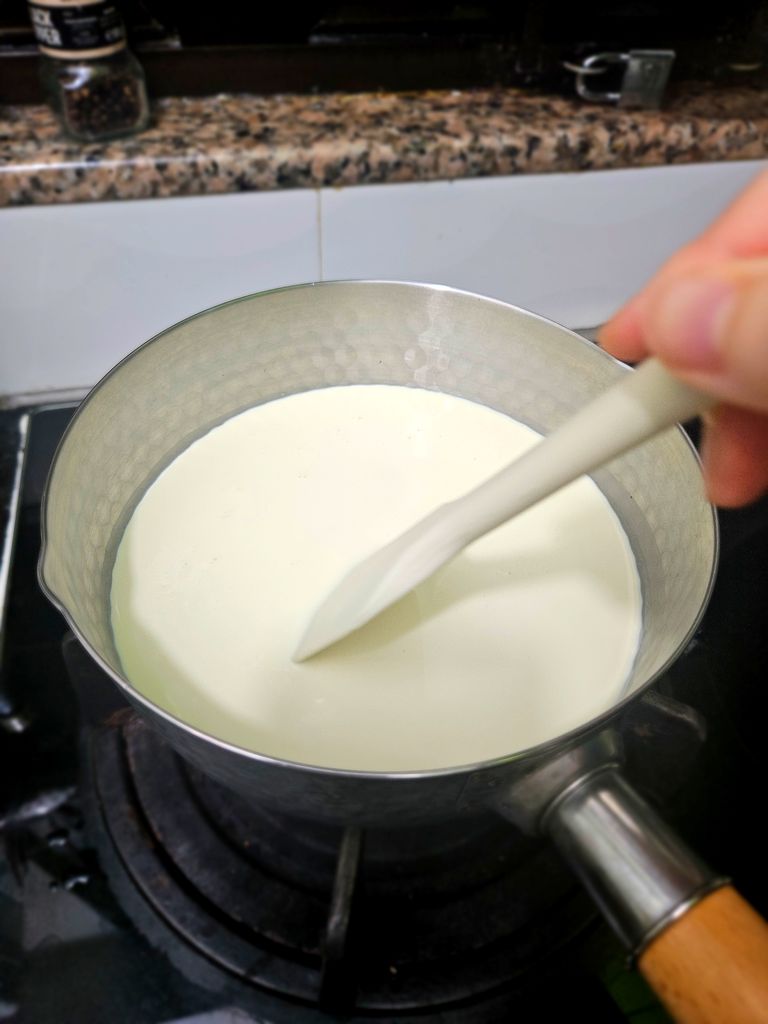
Heating milk and cream gently In the meantime, whisk egg yolks with allulose until smooth.
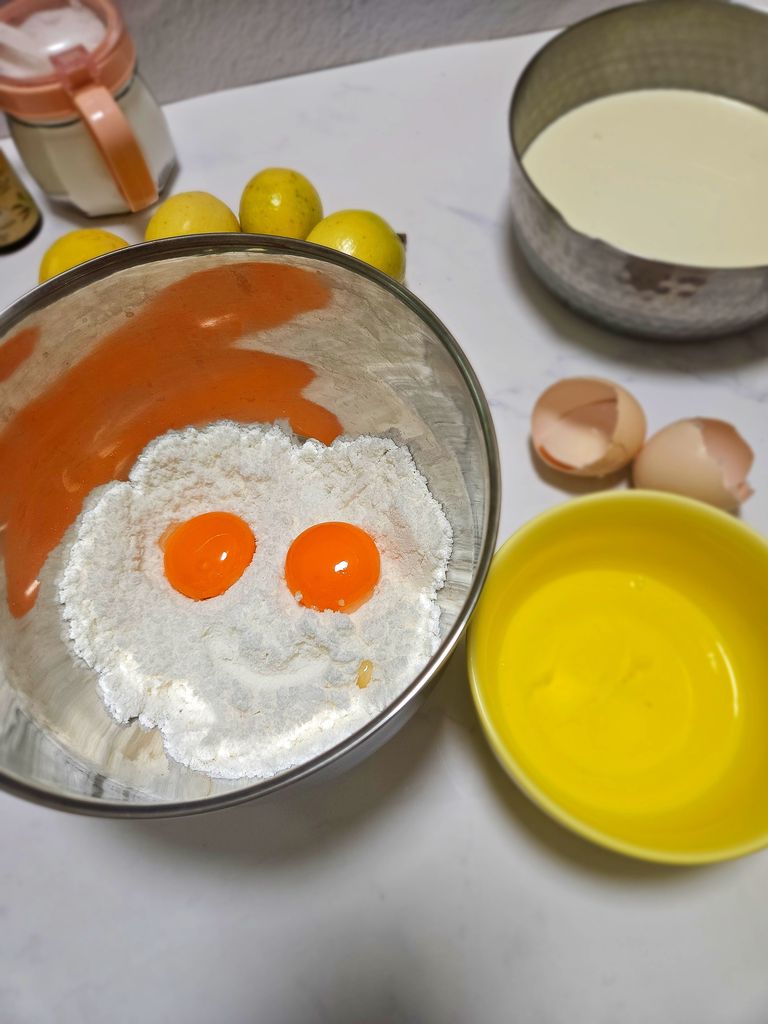
Egg yolks and allulose 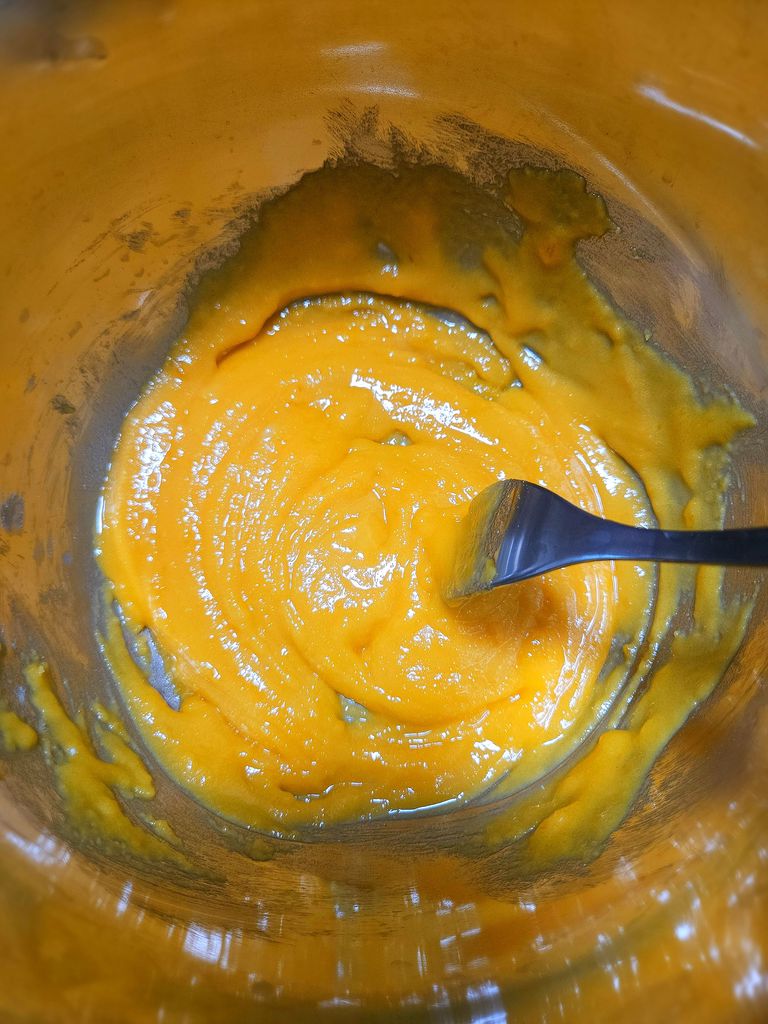
Whisking until lighter Temper the yolks, milk cream mixture to the yolk-allulose mixture, then cook the custard gently to 80°C (176°F).
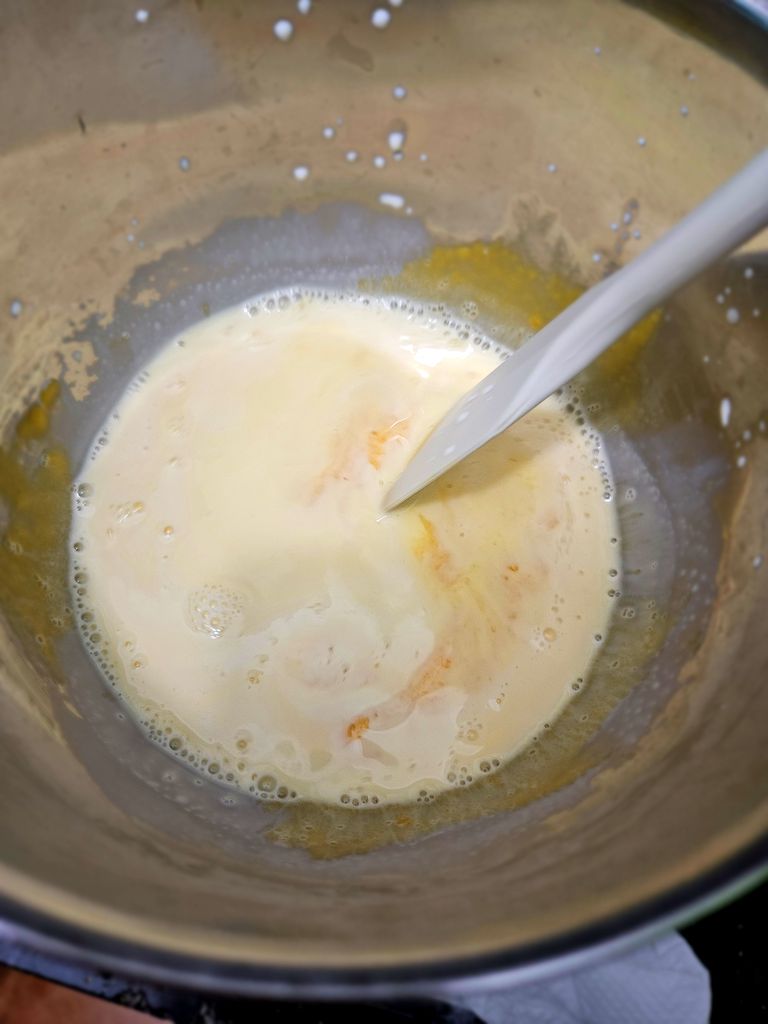
Tempering the egg mixture 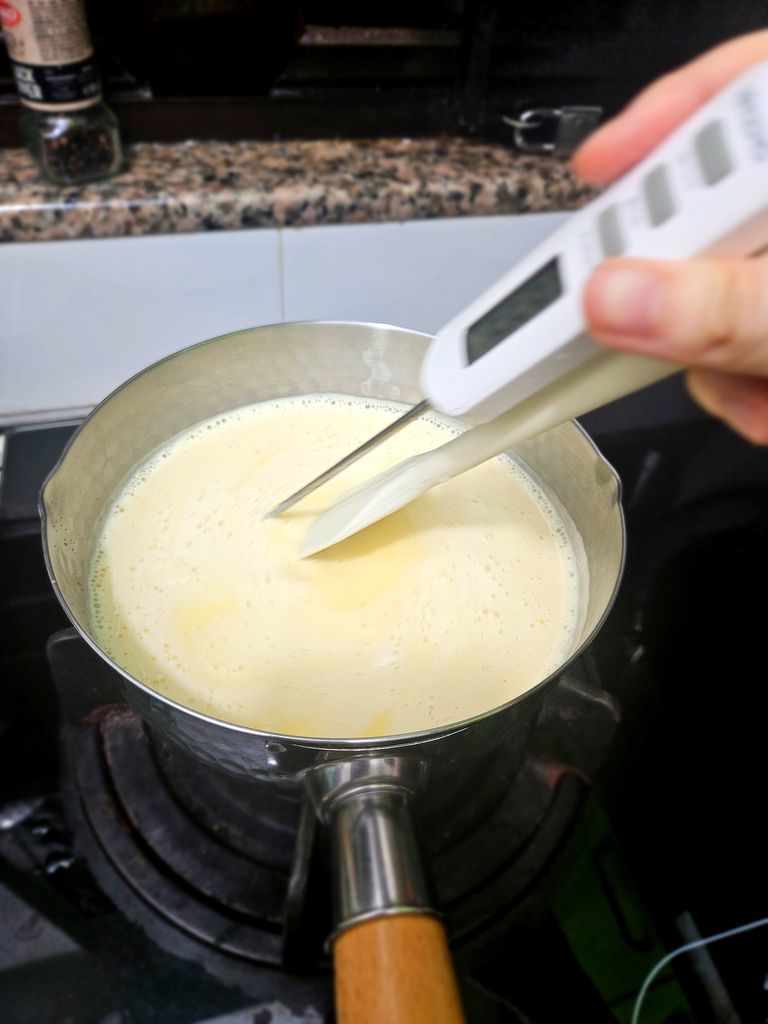
Cooking the base Let the mixture cool.
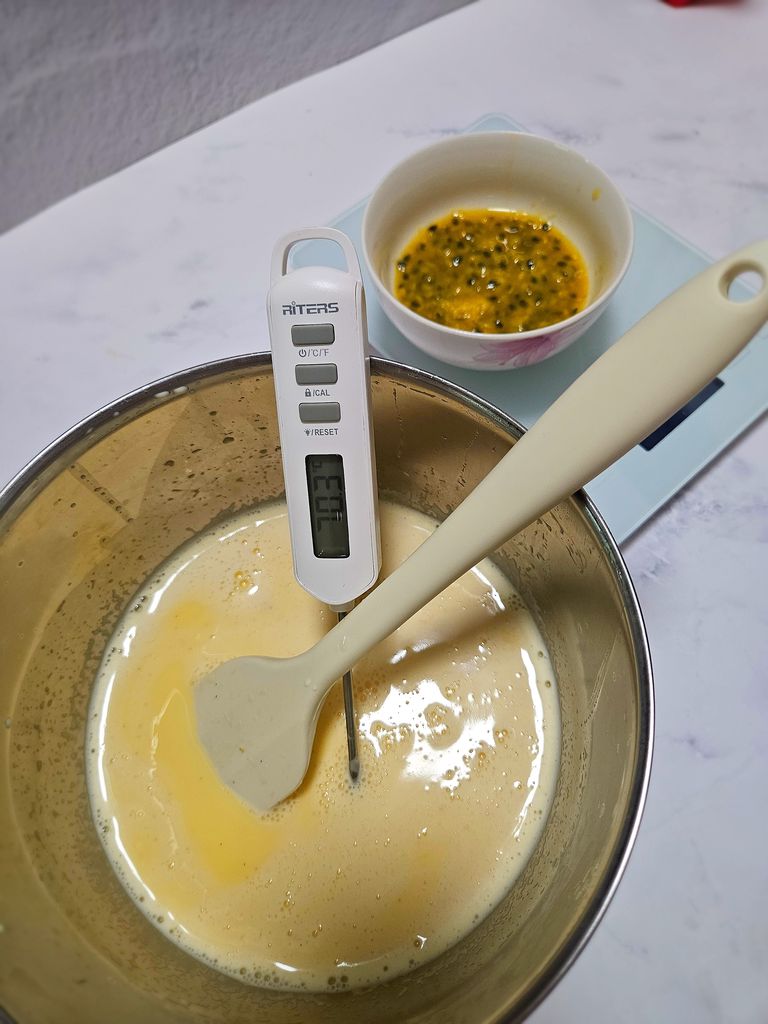
Cooling the custard base Whisk in the passion fruit pulp with seeds.
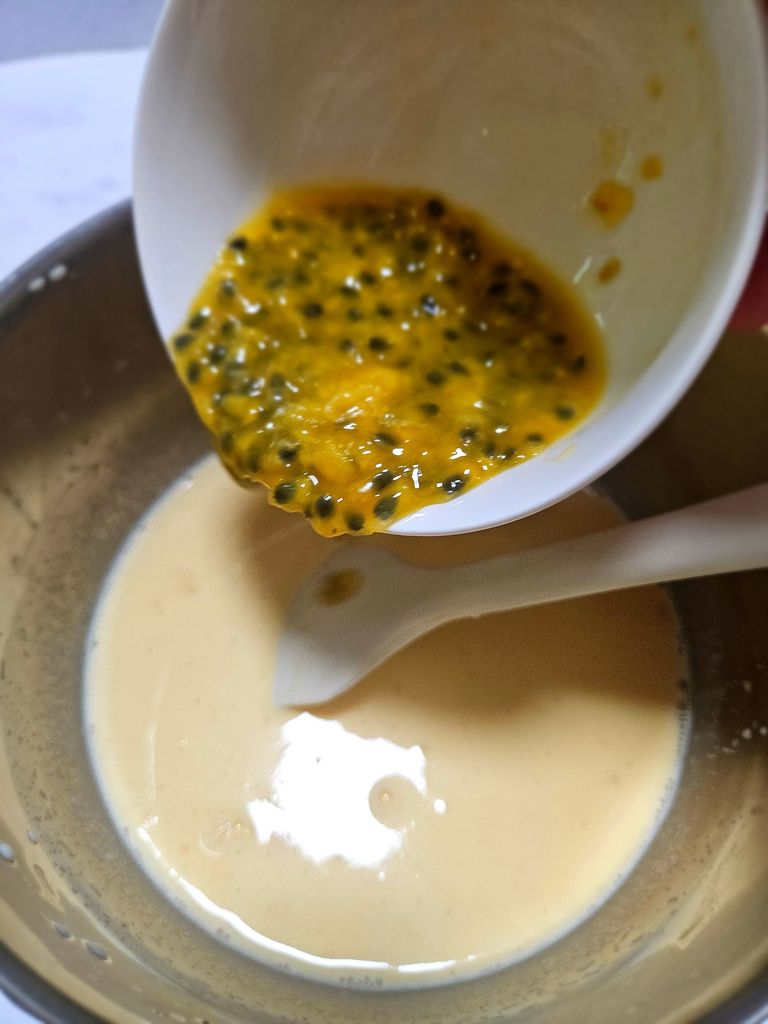
Stirring in passion fruit pulp Why add passion fruit after the custard has cooled?Passion fruit is highly acidic (pH around 2.5–3.2) because of its high citric and malic acid content.
- Egg yolks are sensitive to acid + heat. If you add passion fruit while the mixture is still hot, the acid can cause the egg proteins to curdle or become grainy.
- Milk and cream can also curdle (separate) when mixed with strong acid at high temperatures.
By cooking the plain custard base (milk + cream + egg yolks + allulose) first and letting it cool down before adding the passion fruit pulp, you greatly reduce the risk of curdling and keep the texture smooth and creamy.
It also give better fresh flavor. Passion fruit’s bright, volatile aromas can dull or change slightly with prolonged high heat.
Pour into a zip-top bag and freeze flat until solid.
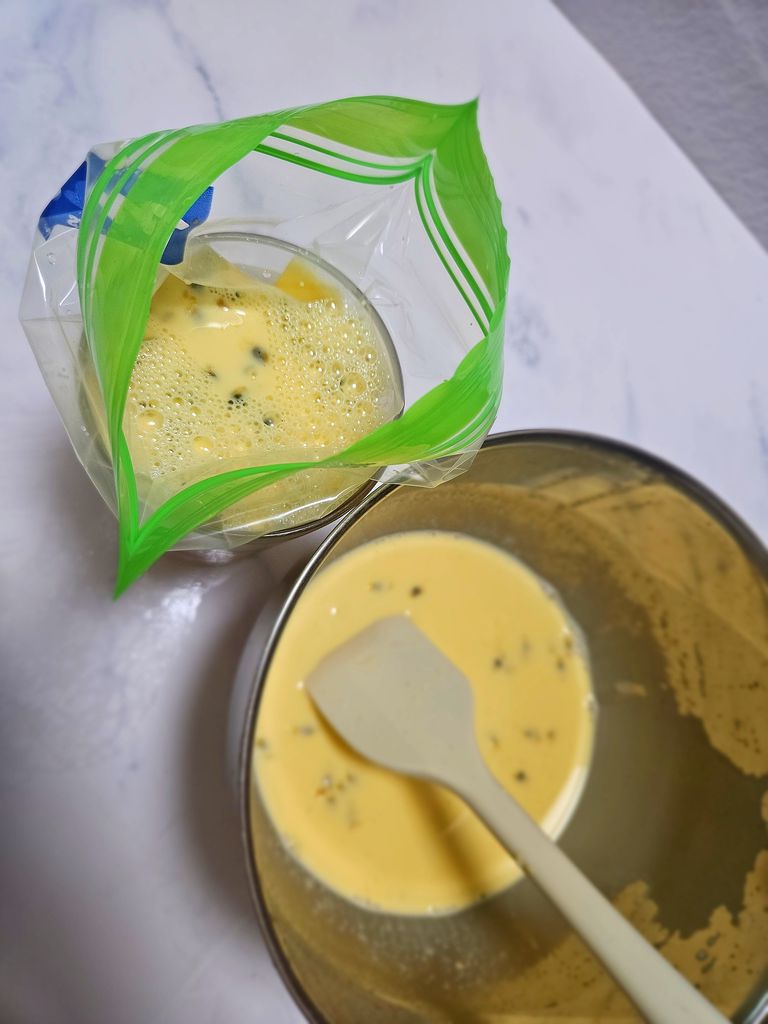
Freezing the custard flat Blend the frozen chunks in a food processor until creamy.
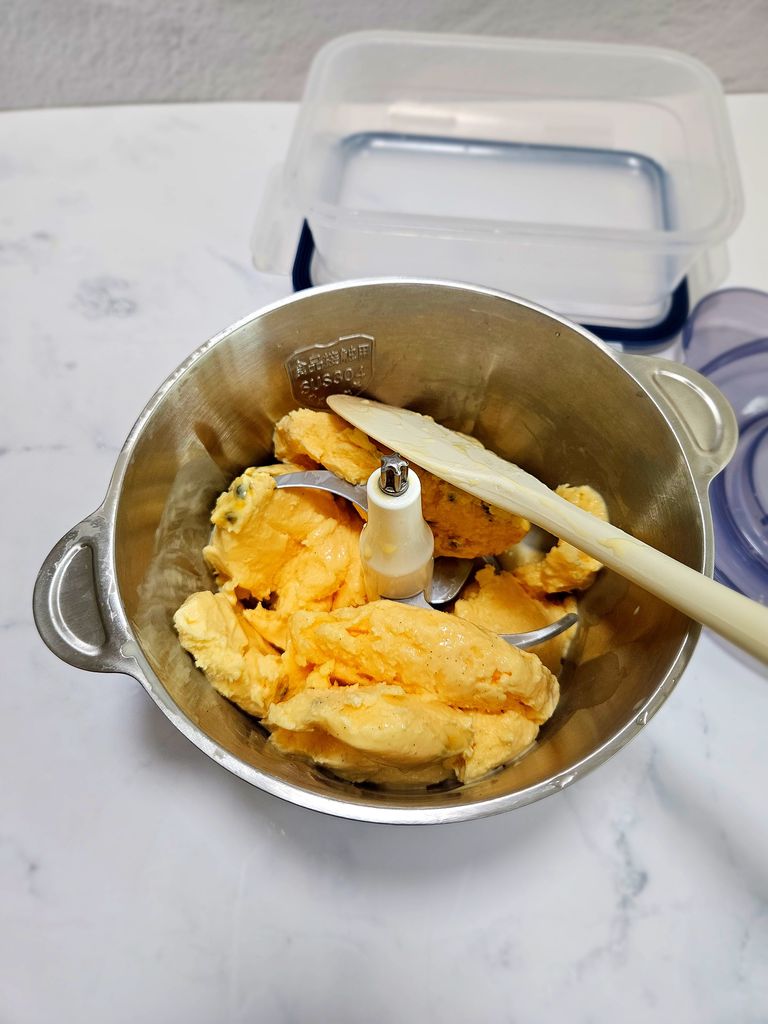
Breaking and blending frozen custard 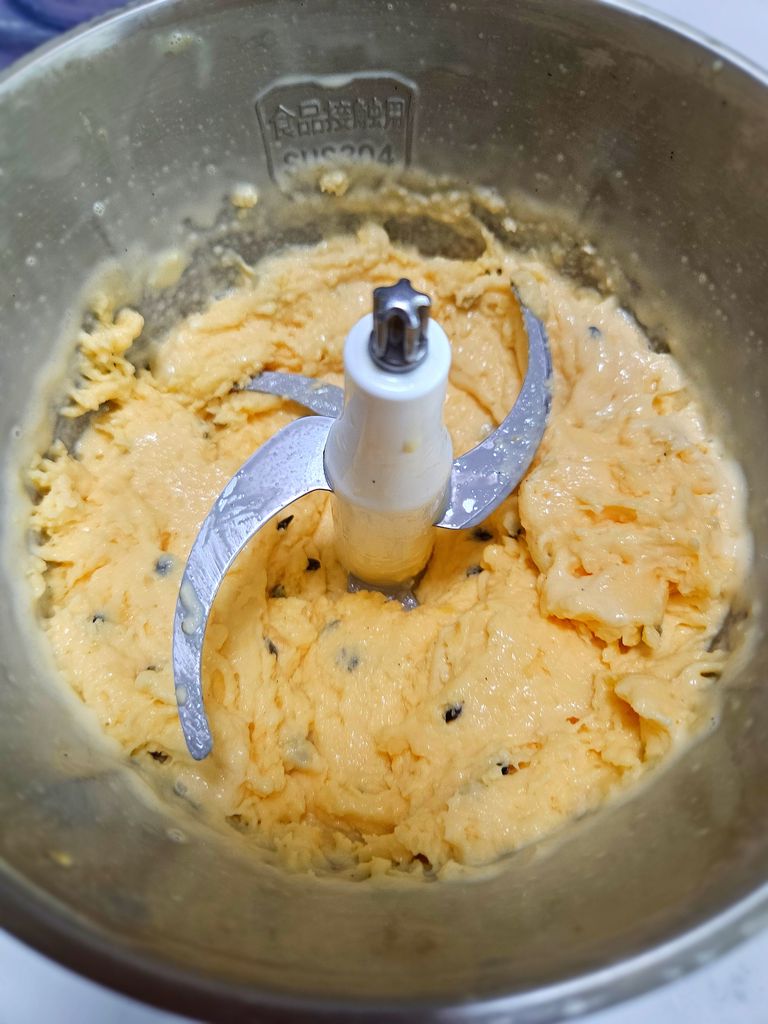
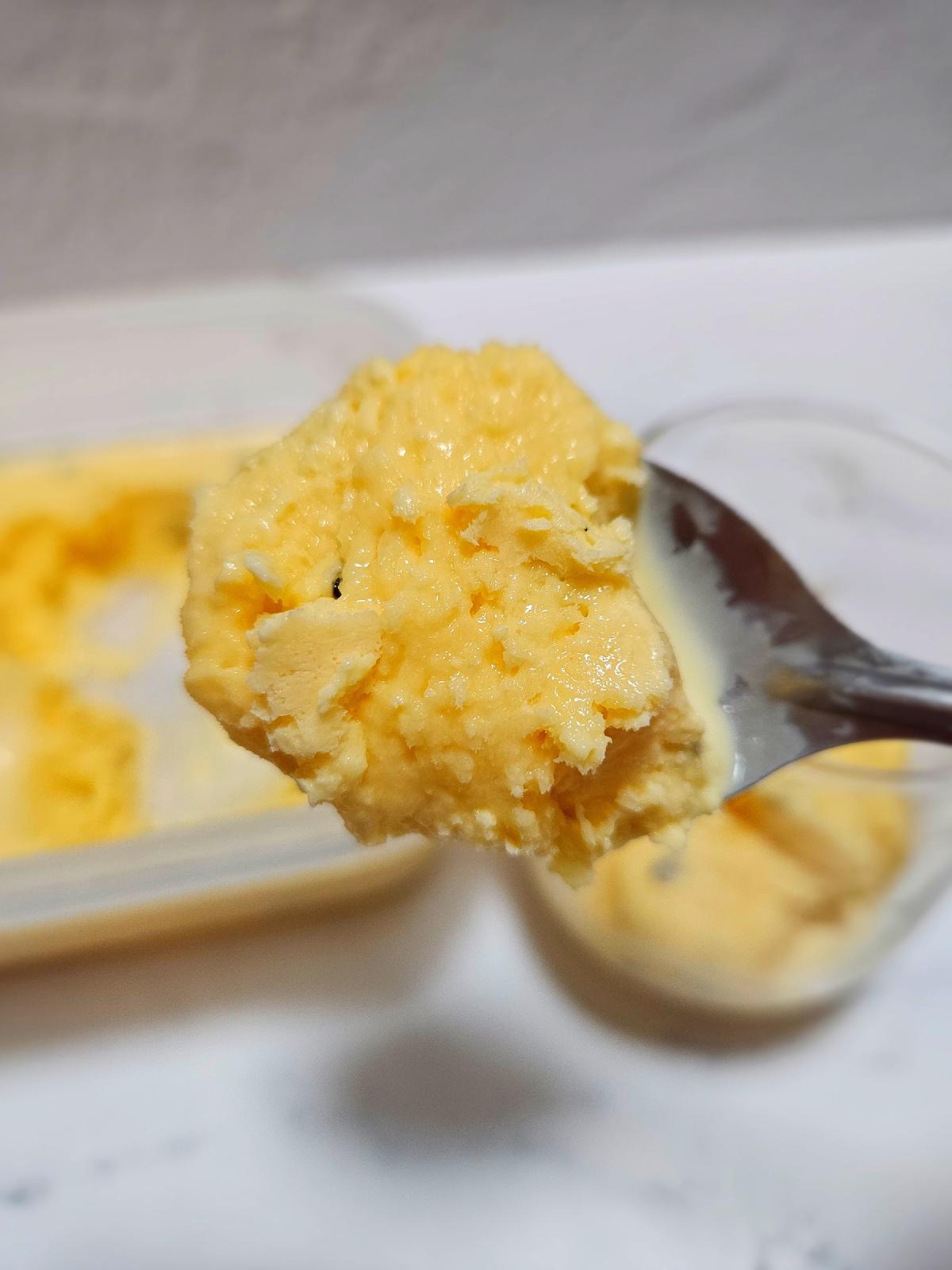
Smooth passion fruit ice cream after blending Transfer to a container and freeze again with parchment on top.


Result#

Let the ice cream sit at room temperature for 5–8 minutes before scooping. Allulose helps with softening the ice cream, but it still firms up nicely in the freezer if freeze for too long (few days).
Why This Method Works#
The custard base (egg yolks cooked to 80°C) creates tiny fat globules and proteins that trap air and water, resulting in creaminess. Freezing flat + food processor blending mimics churning by breaking ice crystals and incorporating air. Allulose further improves scoopability because it doesn’t crystallize like regular sugar.
Recipe#
No-Churn Low Sugar Passion Fruit Ice Cream (Food Processor Method)
Ingredients
- 200 g whole milk
- 300 g double cream (heavy cream)
- 100 g passion fruit pulp with seeds (about 4–6 fruits or store-bought puree)
- 150 g allulose
- 2 large egg yolks (about 37 g)
- pinch fine salt
- 5 ml vanilla extract (optional)
Instructions
- In a medium saucepan, combine the milk, cream, salt, and vanilla (if using). Heat gently over medium heat until the mixture is steaming and just starting to bubble around the edges. Do not boil.
- Remove from heat. Slowly whisk in the passion fruit pulp with seeds.
- In a separate bowl, whisk the egg yolks with the allulose until smooth and slightly lighter in color.
- Slowly whisk a ladleful of the warm passion fruit dairy mixture into the yolks to temper them, then pour everything back into the saucepan.
- Return to low heat and cook, stirring constantly, until the custard thickens slightly and reaches 80°C (176°F). It should coat the back of a spoon.
- Remove from heat and let the mixture cool for about 20–30 minutes.
- Pour the custard into a zip-top freezer bag and lay it flat, or use a shallow container. Chill in the fridge for about 30 minutes, then freeze for at least 4 hours or overnight until fully solid.
- Break the frozen custard into chunks and add them to a food processor. Blend until smooth, creamy, and airy.
- Transfer to a freezer-safe container, smooth the top, and press parchment paper directly onto the surface. Freeze again for 2–3 hours to firm up before serving.
- Let the ice cream sit at room temperature for 5–8 minutes before scooping for the best texture.
Nutrition Facts
Servings 1 scoop (100g)
Amount Per Serving
% Daily Value *
* Percent Daily Values are based on a 2,000 calorie diet.
Your daily value may be higher or lower depending on your calorie needs.


Storage Tips#
- Store in an airtight container for up to 2 weeks
- Press parchment paper directly on the surface to prevent ice crystals
- Best enjoyed within the first week for peak flavor