
Disclosure: This post contains affiliate links. If you make a purchase through them, I may earn a small commission at no extra cost to you. Learn more
This easy salted caramel popcorn is made on the stovetop with caster sugar, delivering that perfect glassy crunch and sweet-salty balance. No corn syrup, no oven — just real ingredients and food science.

Why You’ll Love This Salted Caramel Popcorn#
- Classic sweet-salty balance you crave.
- No corn syrup or oven needed.
- Perfect crunchy texture with a thin, shiny coating.
- Science-backed tips so you nail it every time.
Ingredients Spotlight & Food Science#
Popcorn:
Kernels Get on Iherb 🍿
How Popcorn Kernels Are MadePopcorn is a specific variety of corn (Zea mays everta). Each kernel is a small seed with three main parts:
- Hard outer hull (pericarp) — super tough and airtight
- Starchy endosperm inside — mostly starch + a little water
- Germ (the living part of the seed)
The key is that the hull is extremely strong and seals in moisture perfectly.
Butter + neutral oil for popping
Why 2 types of oils?Butter brings rich flavor, but its low smoke point (~175°C) can lead to burning. Neutral oil has a higher smoke point and transfers heat evenly to the kernels. The combo gives maximum pops + great taste.
Skipping oil risks scorched butter; skipping butter loses flavor.
Caramel Sauce:
Caster sugar
How does caramelization works?Caster sugar melts around 160°C and creates deep amber color with rich toasty flavor through caramelization and Maillard reactions.
Water
Salt creates the perfect sweet-salty hit.
TipHumans crave sweet + salty combos because of evolutionary wiring:
- Sweet signals quick energy (calories from carbs).
- Salt signals essential sodium for hydration and nerve function.
Together, salt boosts perceived sweetness and creates a more intense, rewarding flavor that our brains find highly addictive. A survival trick that feels irresistible today. That’s why salted caramel popcorn hits so hard! 🍿
Butter
Step-by-Step Guide with Photos#
Heat oil + butter on medium heat, until it is bubbling.
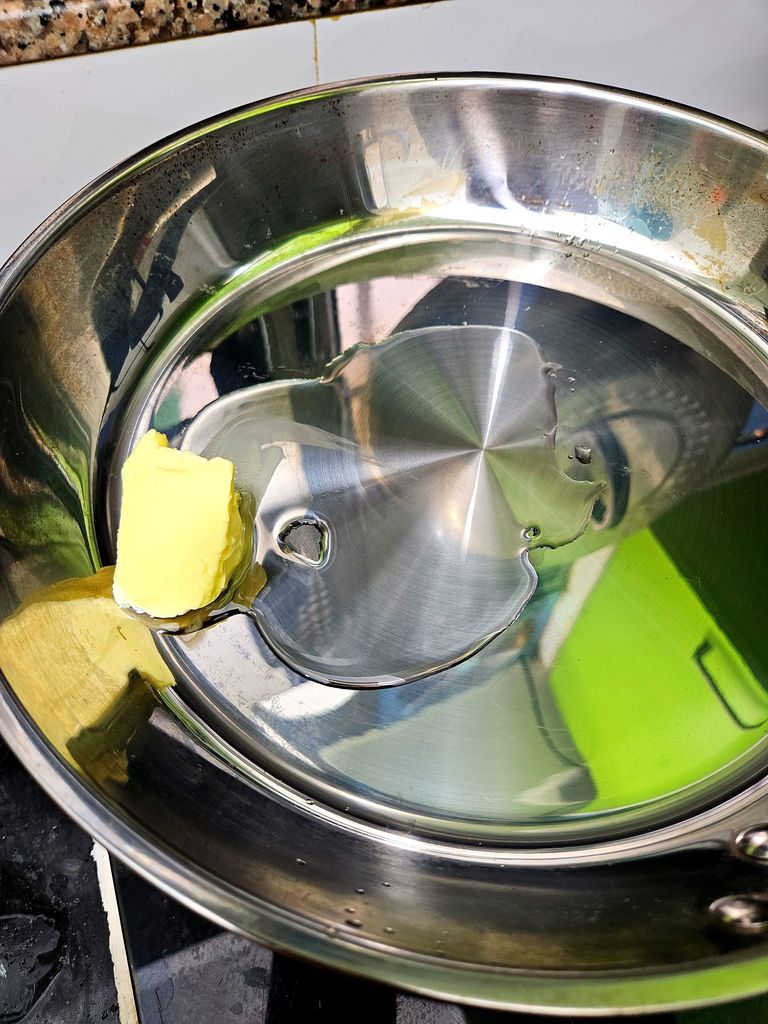
Putting oil and butter into the pot 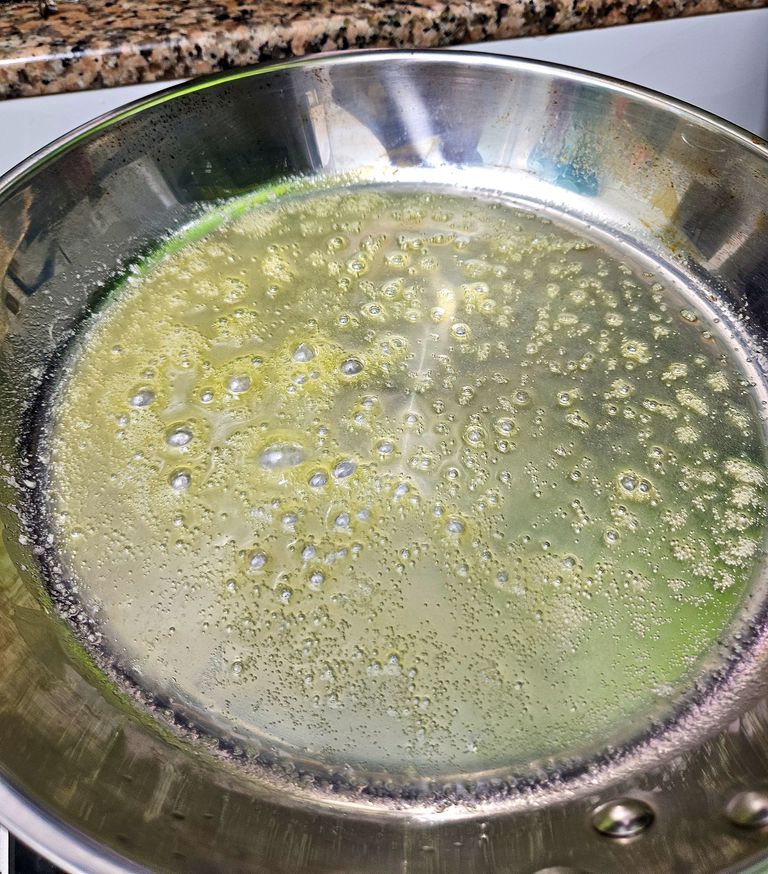
Util it is bubbling Add kernel, stir kernels and cover
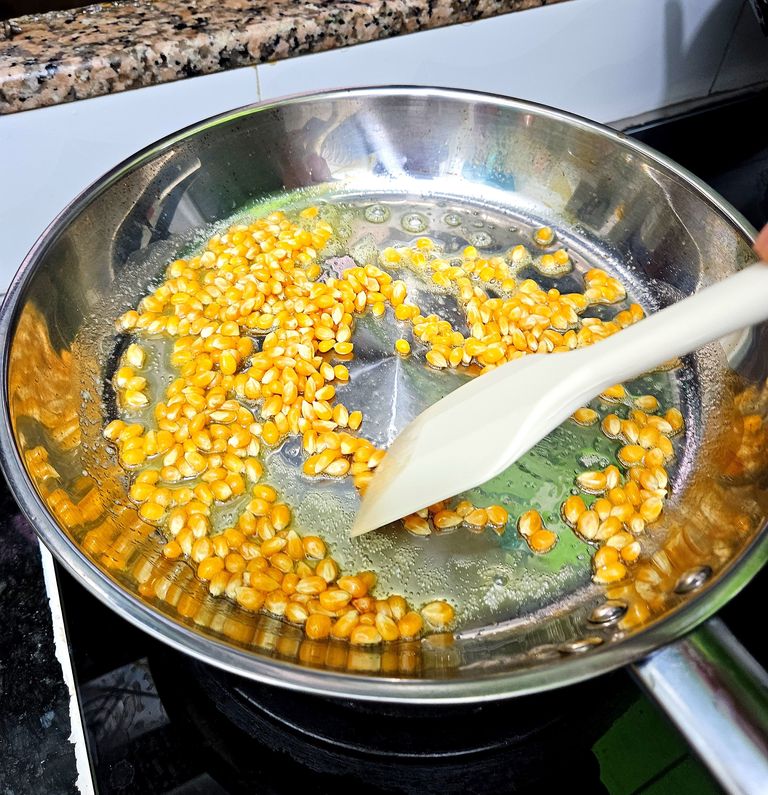
Mixing kernels in the pot 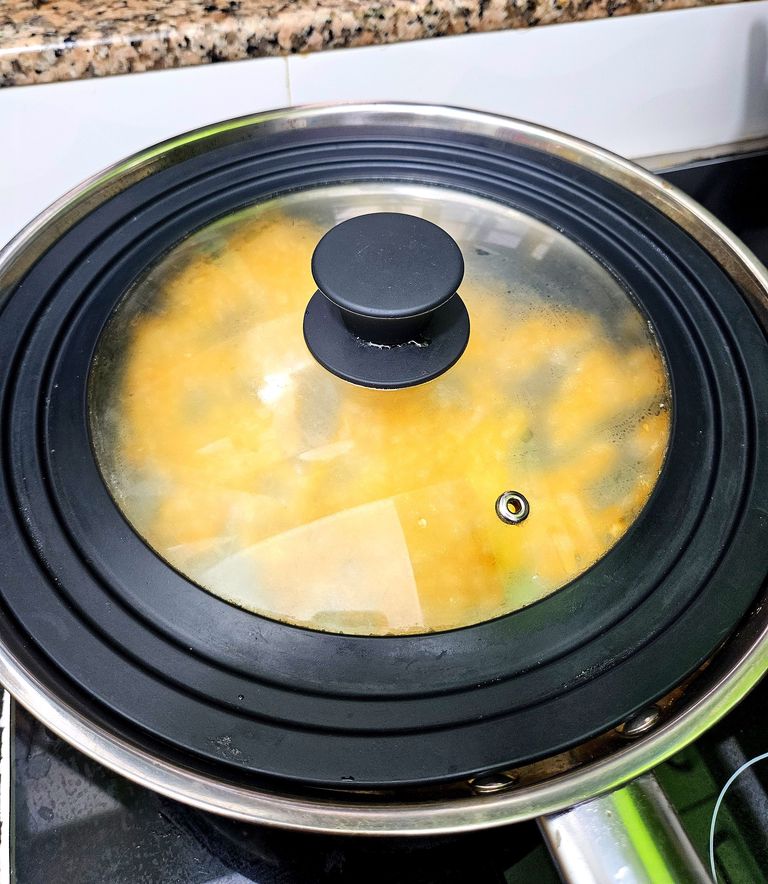
The kernel will start to pop after a few minutes. Wait until the the popping sound slow down before opening the lid
The Science Behind the PopHere’s the fun physics:
- When heated (around 177°C / 350°F), the small amount of water inside the kernel (about 14%) turns into steam.
- The steam is trapped by the hard hull, so pressure builds up rapidly — up to 135 psi (about 9 times the pressure in a car tire!).
- The hull suddenly ruptures. The pressurized steam explodes outward, causing the starch inside to gelatinize and expand dramatically (up to 40 times its original size) in a split second.
- The kernel turns itself inside out — that’s the “pop” you hear and see. This creates the light, airy, crunchy structure we love.
Freshly popped popcorn! Sprinkle a tsp of salt on it. If you see any unpopped kernels, make sure to pick it out before adding the sauce.
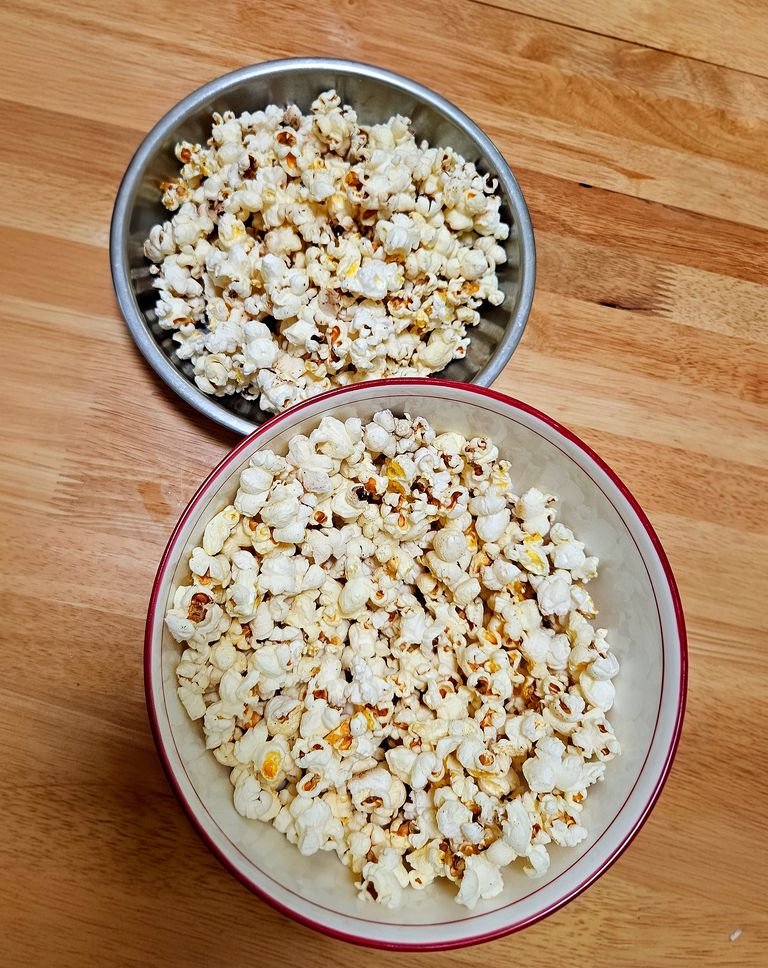
Here we go! Let’s make the caramel sause next! Why Do Some Kernels Not Pop?Unpopped kernels usually happen for one of these reasons:
- Too little moisture — If the kernel is old or dried out, there isn’t enough water to create strong steam pressure.
- Too much moisture — The hull may crack early and leak steam before full pressure builds.
- Damaged hull — Tiny cracks let steam escape slowly instead of building up explosively.
- Uneven heating — Some kernels don’t get hot enough fast enough.
And it is ok to have some “old maid”. The first time I made popcorn I tried to make every kernal pop before turning off the stove. I ended up burning the popcorn. Trust me, it’s not worth it.
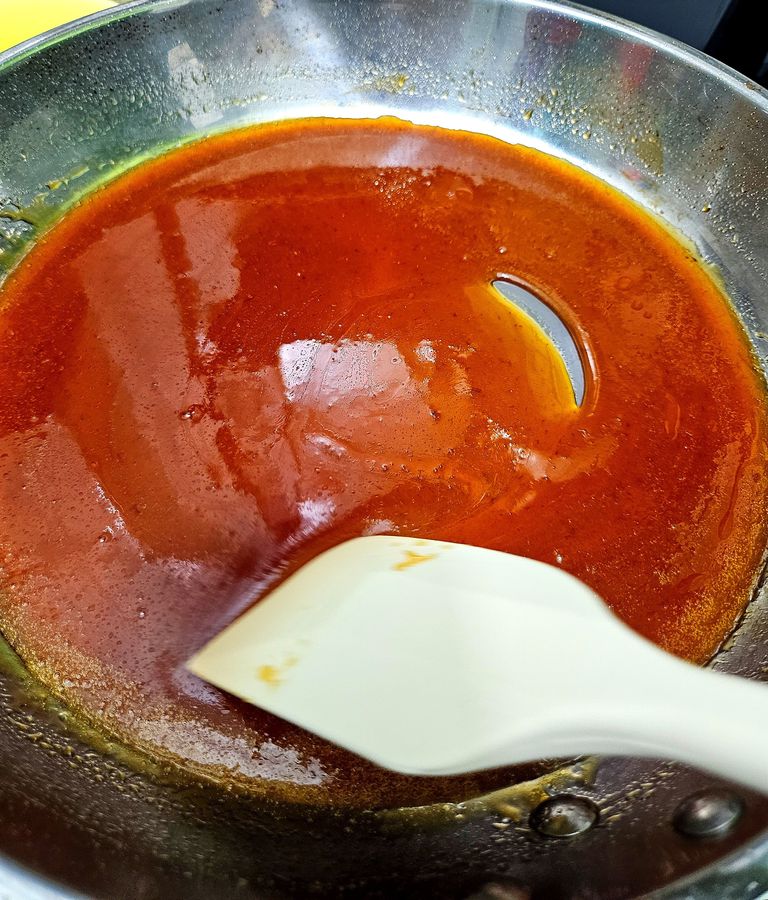
Making the caramel
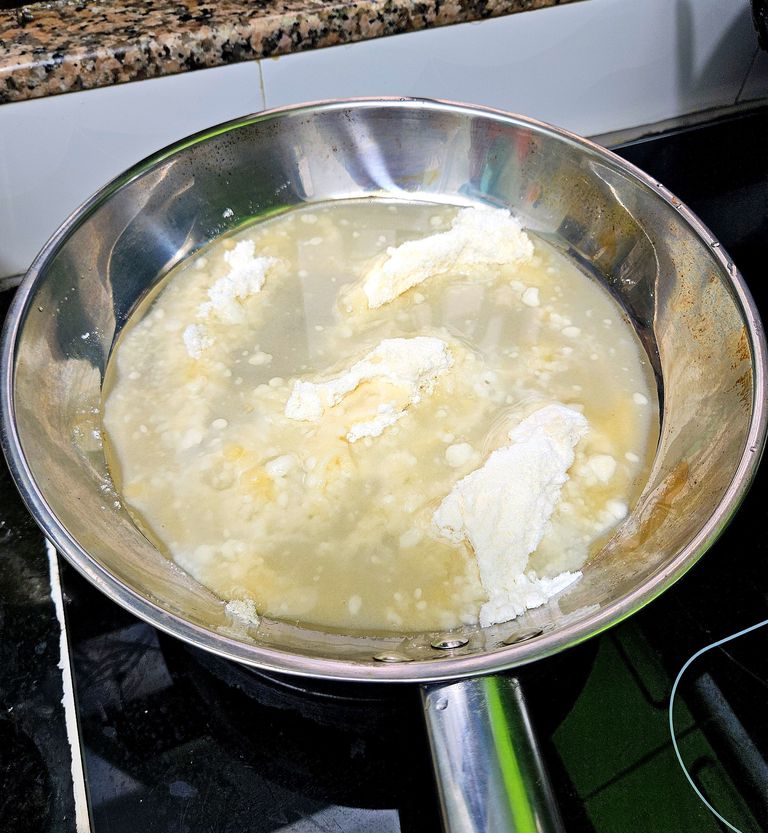
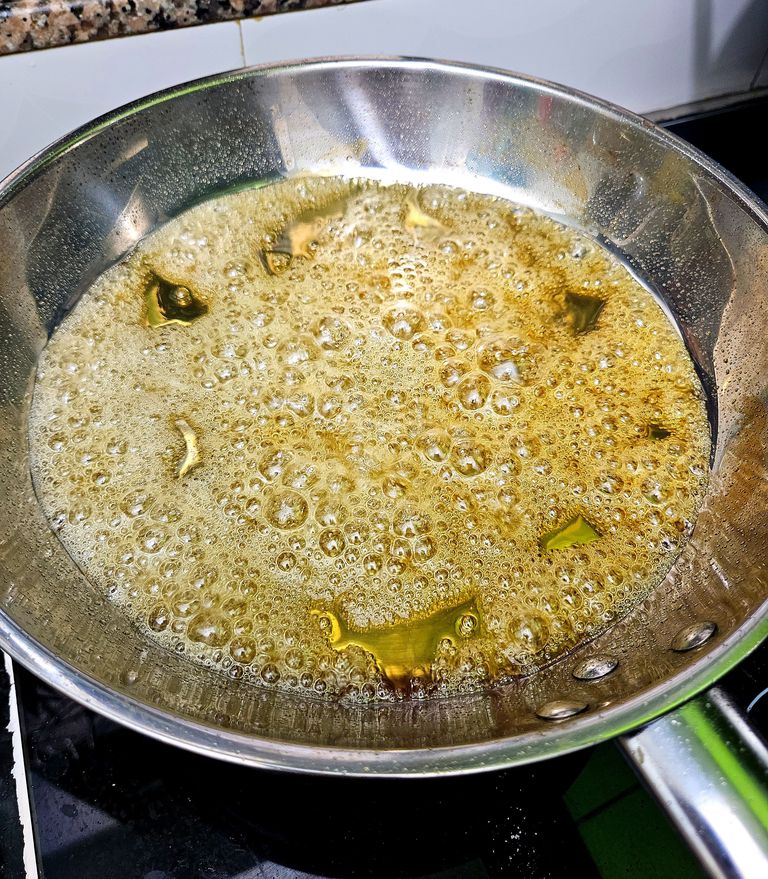 Why add water?
This is called the “Wet Caramel” method (vs Dry Caramel). We make this caramel using the wet method instead of melting sugar on its own (dry method). It is significantly more forgiving and beginner-friendly, especially for home cooks.
Adding water first dissolves the sugar completely into a clear syrup. This prevents uneven melting and reduces the chance of grainy, crystallized caramel. The water also keeps the temperature lower in the early stages (around 100–110°C), giving you more time and control as the mixture approaches the deep amber color. Once the water evaporates, the sugar can caramelize evenly and cleanly.
This is why the recipe tells you to stop stirring once the sugar is mostly dissolved. After that point, stirring can reintroduce sugar crystals and cause the whole batch to seize up and become grainy.
Adding butter to caramel
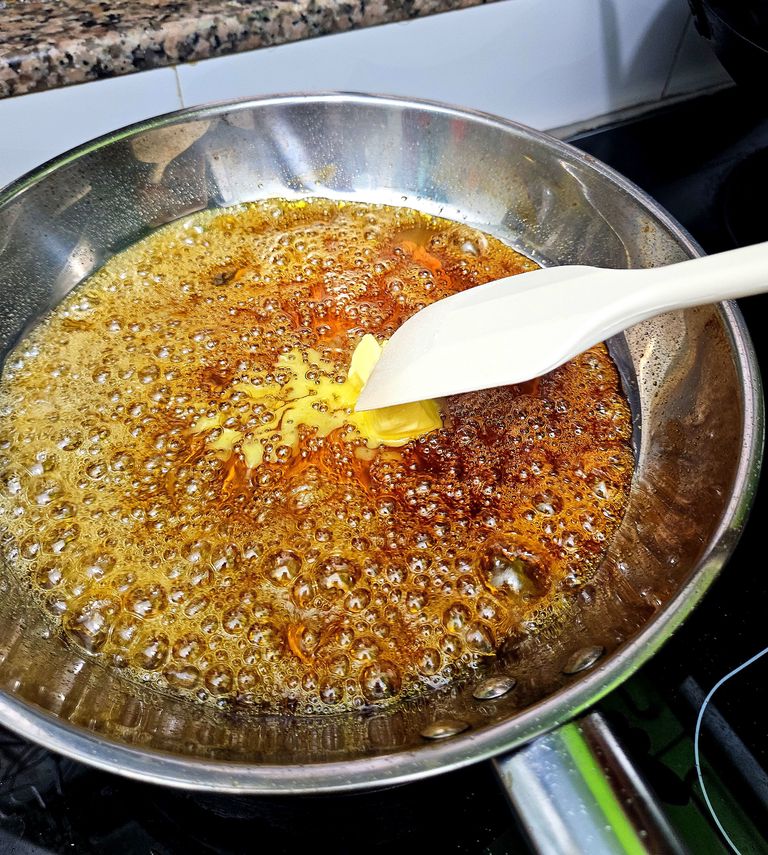 Why butter at the end?
Butter is added off the heat to enrich flavor, create a smooth glossy texture, and stop the cooking process. This gives you that classic thin, crunchy coating on the popcorn instead of a hard candy shell.
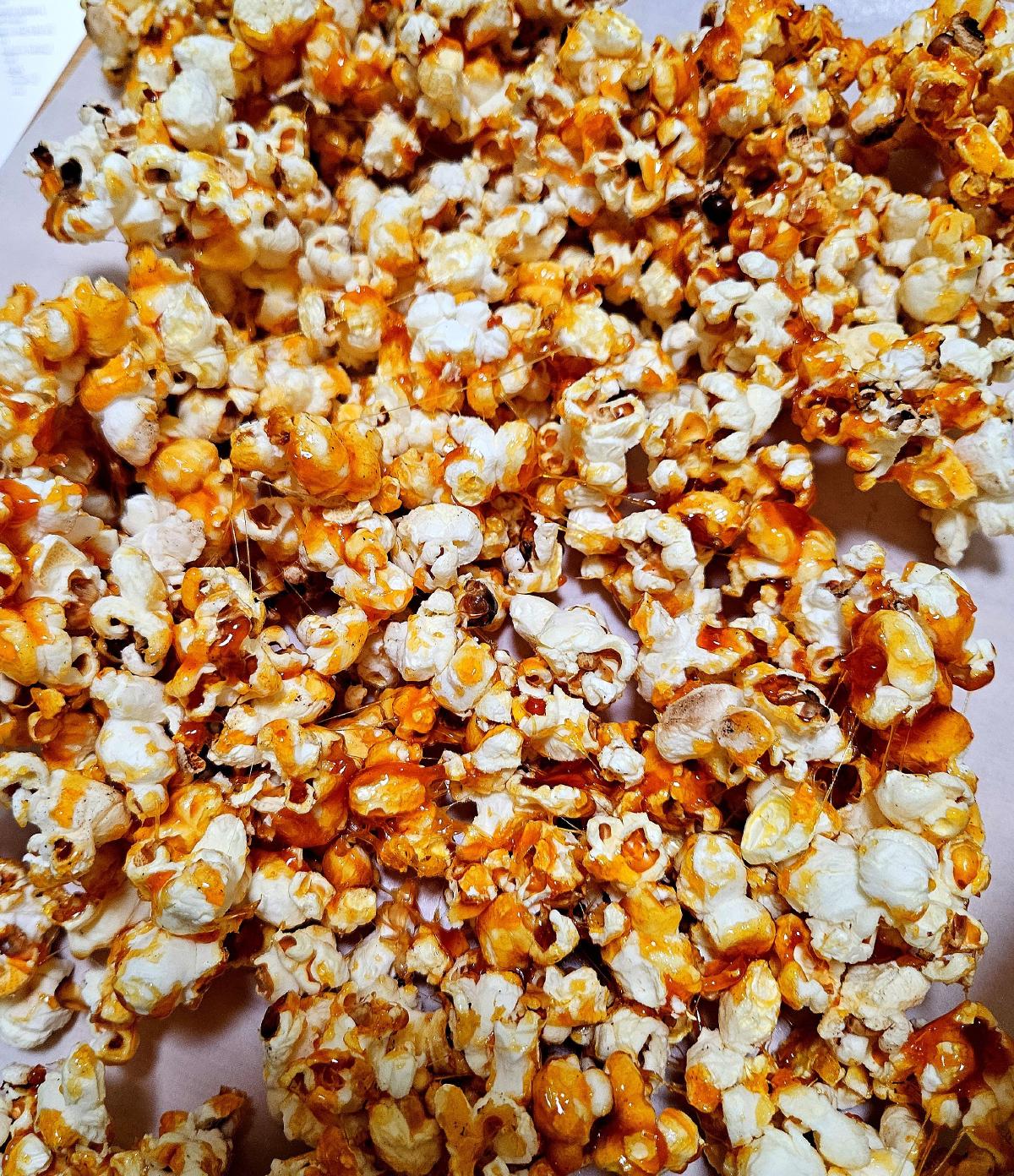
Pouring caramel over popcorn. Act fast here. Once the caramel cools, it will crystalize fast.
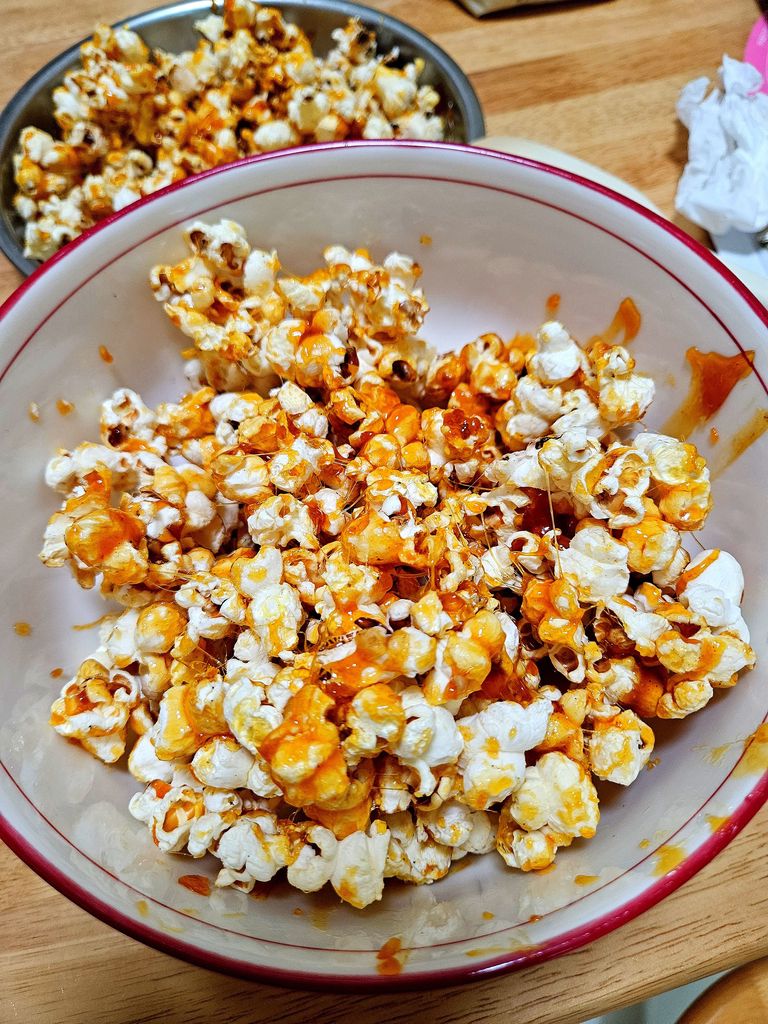
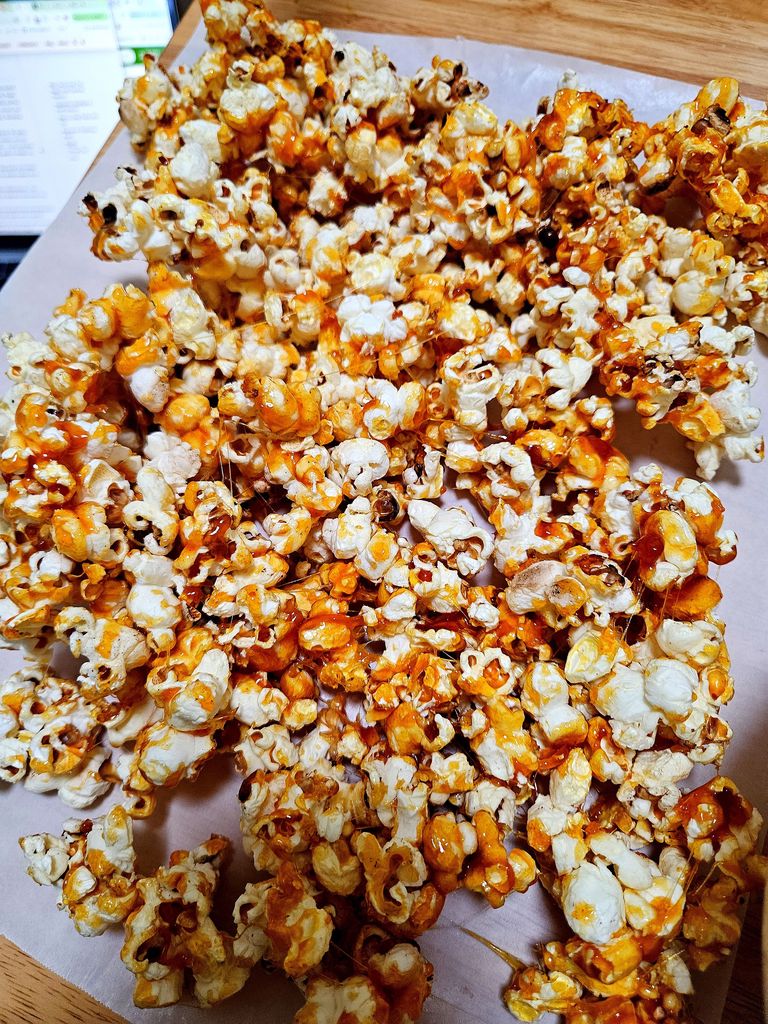
Spreading to cool. Now we want the caramel to crystalize nicely on the popcorn. Once it’s cool, enjoy your freshly made popcorn!


Recipe#
Easy Salted Caramel Popcorn Recipe (Stovetop)
Ingredients
- 14 g butter (for popping)
- 15 ml neutral oil (vegetable, canola, or groundnut)
- 90 g popcorn kernels (about ⅓ cup + 1 Tbsp)
- 5 g salt (for popping)
- 100 ml water
- 210 g caster sugar (1 cup plus 1 tablespoon)
- 14 g butter (for caramel)
- 5 g kosher salt or flaky sea salt (for salted caramel)
Instructions
- In a large heavy-bottomed saucepan, melt 1 Tbsp butter with 1 Tbsp neutral oil over medium heat. Add 90g popcorn kernels and cover with a lid. Shake the pan occasionally. Once popping starts, continue shaking gently until the popping slows dramatically (3–5 minutes). Remove from heat, uncover, and immediately toss with 1 tsp salt. Transfer to a large mixing bowl, discarding any unpopped kernels.
- In a medium saucepan, combine 100ml water and 210g caster sugar. Stir gently just until mostly dissolved, then stop stirring. Cook over medium-low heat until the mixture turns a deep amber color (usually 8–12 minutes). Swirl the pan gently if needed. Do not walk away.
- Once deep amber, remove from heat and stir in 1 Tbsp butter until melted and smooth (the mixture will bubble vigorously). For salted caramel, stir in ½–1 tsp kosher salt at this stage.
- Immediately pour the hot caramel over the warm salted popcorn. Toss quickly and thoroughly with a wooden spoon or spatula to coat evenly—the caramel sets fast.
- Tip the coated popcorn onto a parchment-lined baking tray and spread into a single layer. Break up large clumps while still slightly warm if desired.
- Let cool completely at room temperature (10–20 minutes) until crunchy and hardened. Store in an airtight container for up to 3–4 days.
Nutrition Facts
Servings 1 cup (about 35g)
Amount Per Serving
% Daily Value *
* Percent Daily Values are based on a 2,000 calorie diet.
Your daily value may be higher or lower depending on your calorie needs.


Storage Tips#
- Keep in an airtight container at room temperature for up to 3–4 days.
- In humid climates it may soften slightly — re-crisp in a low oven (120°C/250°F) for 10 minutes if needed.
FAQs#
What if I want to use allulose instead of sugar?
Why does sugar work so well for caramel?
How much salt should I use?
Can I add mix-ins?
Hope you all enjoy the science bites of caramel popcorn!