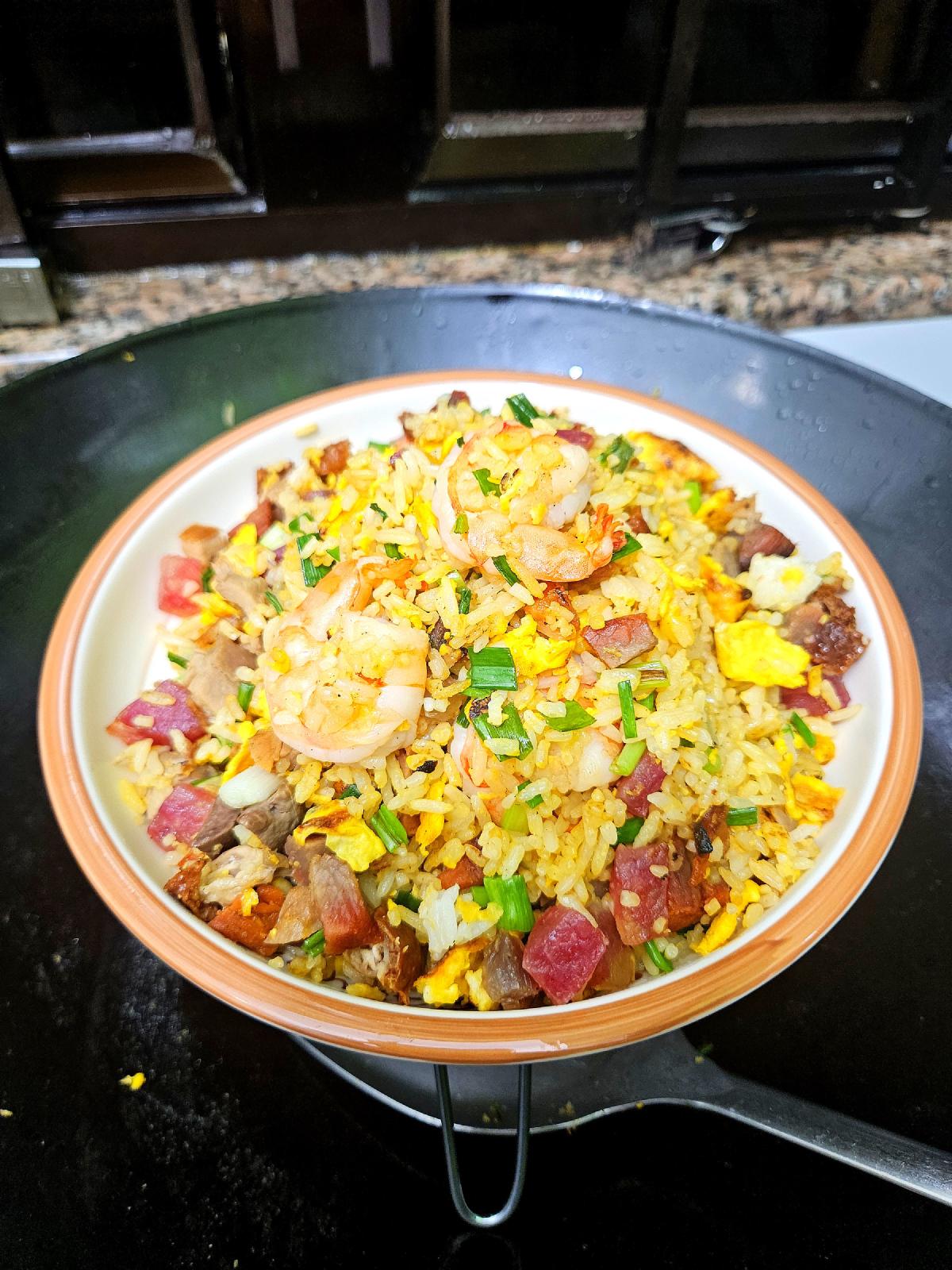

If you have ever stepped into a traditional Hong Kong Tea Restaurant (Cha Chaan Teng 茶餐廳), you know that Yangzhou Fried Rice is a staple of the local food culture. It is more than just a quick meal. It is a display of a chef’s skill, focusing on the perfect balance of “Wok Hei” and the golden rule of fried rice: distinct, non-clumping grains.
In this guide, we break down the professional techniques shared by master chefs to help you recreate this masterpiece at home.
What Makes Yangzhou Fried Rice Special?#
Unlike simple egg fried rice, the Yangzhou version is a “rich” fried rice. The Hong Kong style specifically highlights the aromatic combination of shrimp, eggs, and green onions. The goal is to achieve a texture where every grain of rice is separate and coated with flavor, a quality known in Cantonese as “lik lik fun ming” (粒粒分明).

Key Ingredients#

- Rice: High-quality rice, ideally chilled or handled to ensure it isn’t too wet. Left-over rice will be the best.
- Proteins: Fresh shrimp and eggs.
- Aromatics: A generous amount of chopped green onions.
- Seasoning: Simple salt, soy sauce and oil to let the natural aromas of the ingredients shine
These are the traditional ingredients. But creativity is always encouraged lol. My favorite ingredient to added are diced Chinese sausage (Lap Cheong), Spam, and whatever meat that I have in my fridge. As you can see there are diced Lap Cheong in the photos.
Too much green onion? Wanna save them for next fried rice?
- Wash the green onions under cold water, trim off roots and wilted tops.
- Pat them very dry with paper towels (key to avoid clumping/ice).
- Chop into small pieces.
- Transfer to a freezer zipper bag. Squeeze out air, seal tightly.
- Label with date and freeze flat.
Use straight from frozen—no thawing needed. Lasts 3–6 months.
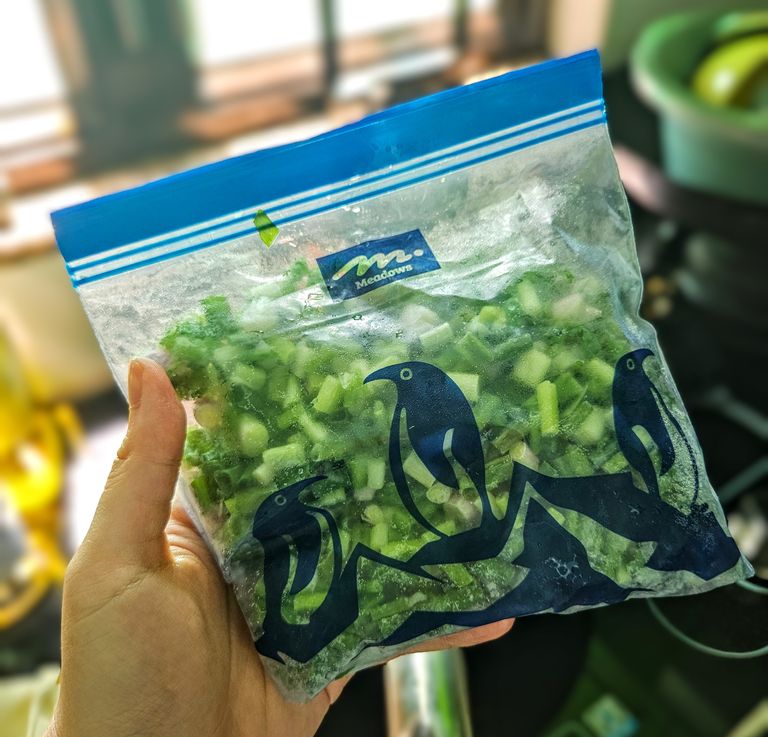
Frozen Cropped Green Onion

Cooking Steps#
Ensure the rice is dry and grains are separated before starting. Use a spoon to break them apart if neccesary.
Prepare the shrimp: If using fresh shrimp, peel off the shells, then devein them by making a shallow cut along the back and removing the dark vein with a toothpick or the tip of a knife. Rinse under cold water and pat dry thoroughly with paper towels.
If using frozen shrimp, thaw them safely first: place in a colander and rinse under cool running water for 1–2 minutes to remove ice crystals. If not already peeled and deveined, peel and devein as above, then pat dry well.
Place the prepared shrimp in a bowl. Add 1/4 tsp salt and 1/4 tsp ground white pepper (or to taste), mix well to coat evenly, and let them marinate for 10–15 minutes while you prepare other ingredients. This simple seasoning draws out moisture slightly and builds flavor.
Beat the eggs in a bowl, add punch of salt.
Heat 1 tablespoon of oil in a wok over high heat. Sear the shrimp until just pink, then remove and set aside.


- Add the remaining oil and pour in the beaten eggs. While the eggs are still runny (half-cooked), immediately add the rice.


- Use a ‘dry frying’ technique: stir-fry vigorously, breaking up any clumps until every grain of rice is coated in egg and begins to ‘dance’ in the wok. If the rice is too wet, spread it out in the wok to allow the steam escape. You should see all the rice are seperated and not sticking together.

Add the diced BBQ pork and the cooked shrimp back into the wok. Continue stir-frying.
Season with salt and add soy sauce by the edge of the wok for the aroma. Continue stir-frying until the rice smells fragrant and toasted (Wok Hei).

- Add the chopped green onions at the very last second. Toss quickly so the residual heat releases their aroma without wilting them completely.
- Serve immediately while steaming hot to maintain the ’lik lik fun ming’ (distinct grain) texture.
The most important professional tip is moisture control. If using fresh rice, spread it out to let steam escape, or use day-old refrigerated rice to ensure a dry, fragrant finish.
Recipe#
Best Authentic Hong Kong Style Yangzhou Fried Rice (揚州炒飯)
Ingredients
- 300 g cooked jasmine rice (chilled or dried out)
- 100 g fresh shrimp, peeled and deveined
- 100 g Char Siu (BBQ Pork), diced
- 2 large eggs, lightly beaten
- 3 green onions, finely chopped
- 3 g fine salt
- 30 ml vegetable oil
- 15 ml light soy sauce
Instructions
- Ensure the rice is dry and grains are separated before starting; moisture is the enemy of a good fry.
- Place the shrimp in a bowl. Add 1/4 tsp salt and 1/4 tsp ground white pepper (or to taste), and let them marinate for 10–15 minutes while you prepare other ingredients.
- Beat the eggs in a bowl, add punch of salt.
- Heat 1 tablespoon (15 ml) of oil in a wok over high heat. Sear the shrimp until just pink, then remove and set aside.
- Add the remaining oil and pour in the beaten eggs. While the eggs are still runny (half-cooked), immediately add the rice.
- Use a ‘dry frying’ technique: stir-fry vigorously, breaking up any clumps until every grain of rice is coated in egg and begins to ‘dance’ in the wok. If the rice is too wet, spread it out in the wok to allow the steam escape. You should see all the rice are seperated and not sticking together.
- Add the diced BBQ pork and the cooked shrimp back into the wok. Continue stir-frying.
- Season with salt and add soy sauce by the edge of the wok for the aroma. Continue stir-frying until the rice smells fragrant and toasted (Wok Hei).
- Add the chopped green onions at the very end. Toss quickly so the residual heat releases their aroma without wilting them completely.
- Serve immediately while steaming hot to maintain the ’lik lik fun ming’ (distinct grain) texture.
Nutrition Facts
Servings 1 bowl
Amount Per Serving
% Daily Value *
* Percent Daily Values are based on a 2,000 calorie diet.
Your daily value may be higher or lower depending on your calorie needs.


Frequently Asked Questions#
Why is my fried rice mushy?
The most common mistake is using rice that is too wet or freshly cooked. Professional chefs ensure the rice is completely dry before it hits the wok so it can absorb the oil and egg evenly without clumping.
If the rice are mushy, try frying the rice for longer during step 4 (frying eggs and rice together) and let the steam escape before proceeding.
What is the secret to the yellow color?
Can I use day-old rice from the refrigerator?
What kind of wok should I use?
Can I substitute the Char Siu (BBQ Pork)?
Absolutely. You can use diced roast chicken, ham, or even firm tofu as protein alternatives. However, Char Siu’s sweetness and aroma are what give the dish its distinctive Hong Kong-style taste.
In this recipe, I also added diced Chinese sausage (Lap Cheong) since I have it in the fridge. Creativity is encouraged!