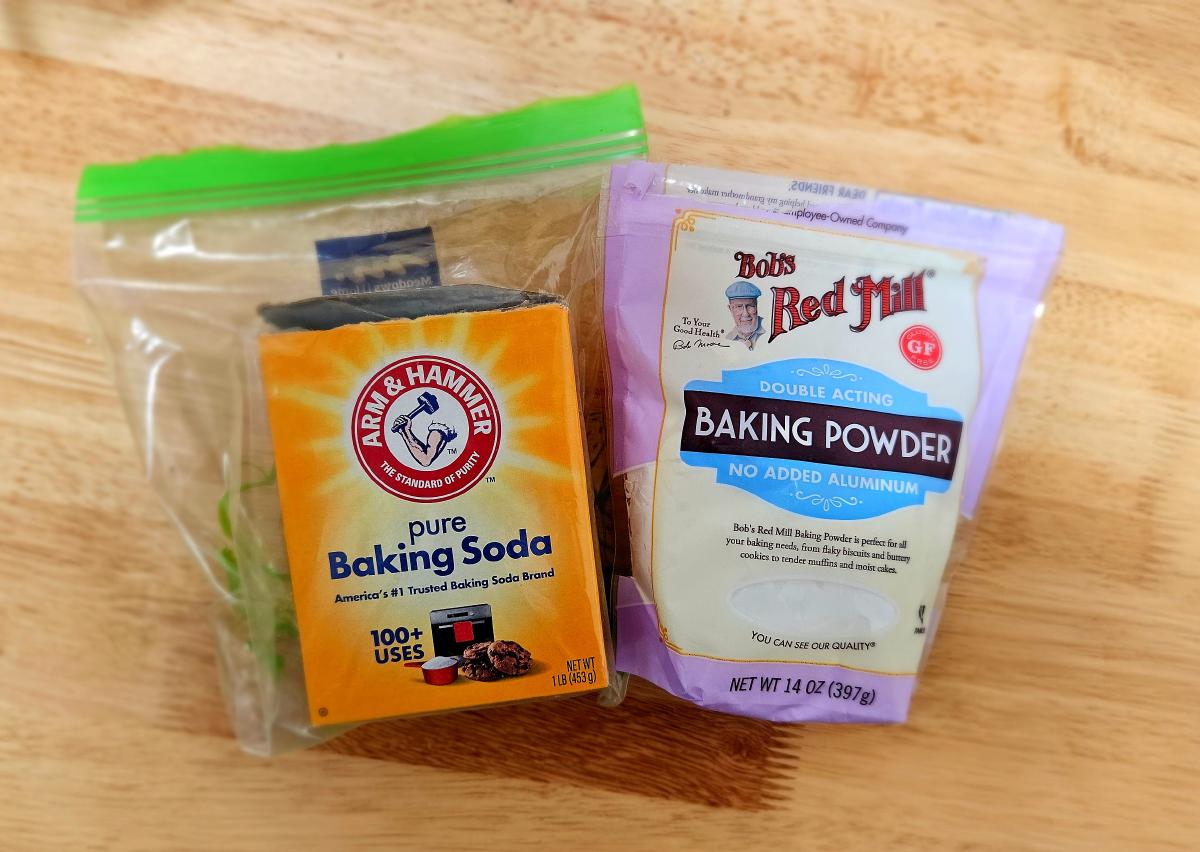

Baking soda and baking powder — two tiny white powders that look almost identical. Yet one wrong swap and your fluffy cake turns into a hockey puck or tastes like a chemistry experiment gone wrong.
So… can you use baking soda and baking powder interchangeably?
Short answer: Almost never.
Here’s exactly why recipes call for both, what each one actually does at the molecular level, and how to swap them safely when you’re in a pinch.

The Quick Chemistry Lesson#
Both powders create carbon dioxide (CO₂) gas bubbles that make your cakes rise, your cookies spread, and your quick breads fluffy.
But they do it in completely different ways.
Baking Soda (Sodium Bicarbonate)#
- What it is: Pure sodium bicarbonate (NaHCO₃).
- How it works: It needs an acid to react. When mixed with something acidic (buttermilk, yogurt, lemon juice, cocoa powder, honey, molasses, brown sugar), it instantly produces CO₂.
- Reaction:
NaHCO₃ + Acid → CO₂ + Water + Salt (sodium salt) - Timing: Single-acting — it reacts as soon as liquid is added. All the gas is released early in the mixing stage.
- Bonus effect: It neutralizes acids in the recipe, which can mellow harsh flavors and create a more neutral pH.
Pro nerd fact: Without acid, baking soda just sits there doing nothing. Too much baking soda without enough acid = bitter, soapy, metallic taste and a weird yellow-green color in chocolate or banana baked goods.
Baking Powder#
- What it is: Baking soda + a dry acid (usually cream of tartar, monocalcium phosphate, or sodium aluminum sulfate) + cornstarch (to keep it dry).
- How it works: The acid is already built in, so it doesn’t need extra acid from the recipe.
- Double-acting magic:
- First reaction (room temperature): A little CO₂ is released as soon as liquid hits it.
- Second reaction (oven heat): The remaining acid activates at higher temperatures, releasing more gas right when the batter needs it most.
- Result: More controlled, longer-lasting rise.

Most modern baking powder is “double-acting”. “Double-acting” means the powder makes gas in two stages: one reaction starts as soon as liquid is added, and a second happens when heat is applied in the oven. That’s why pancakes, muffins, and similar batters can still rise well even if they sit briefly before cooking.
- Sodium bicarbonate (baking soda): the leavening base that produces carbon dioxide when it reacts with acid.
- Monocalcium phosphate: a fast-acting acid that helps create an early rise. - Sodium acid pyrophosphate: a slower, heat-activated acid that helps create a later rise in the oven.
- Cornstarch: a neutral filler that absorbs moisture and helps prevent premature reaction.
Why Do Recipes Call for both Baking Soda and Baking Powder?#
This is the question every home baker eventually asks.
Recipes use both for three smart scientific reasons:
Balanced Leavening + Flavor Control
Baking soda neutralizes acids in the recipe (yogurt, buttermilk, cocoa) so the final flavor isn’t too tangy. But it also creates an early burst of gas. Baking powder then takes over for the second, heat-activated rise. Perfect balance = tall, tender crumb without metallic aftertaste.pH Matters for Texture and Color
Too much baking soda makes the batter alkaline → weird colors and soapy taste.
Too much baking powder can make things overly acidic or leave a chalky aftertaste.
Using both keeps the pH in the sweet spot (around 6.5–7.5) for beautiful browning, tender texture, and great flavor.Different Reactions = Better Rise
Early gas (from baking soda) gets the batter started. Late gas (from baking powder) pushes the structure higher in the oven before it sets.
Classic examples:
- Chocolate cake or banana bread → Both (cocoa and bananas are acidic).
- Buttermilk biscuits or pancakes → Often both.
- Plain sugar cookies → Usually just baking powder (no acid present).
Can You Substitute One for the Other?#
Short answer: Only with careful math and adjustments.
Baking Powder → Baking Soda (Rarely works well)#
- Use ¼ tsp baking soda + ½ tsp acid (lemon juice, vinegar, or cream of tartar) for every 1 tsp baking powder.
- You lose the double-acting benefit, so your bake may not rise as high or evenly.
Baking Soda → Baking Powder (More common swap)#
- Use 2–3 tsp baking powder for every 1 tsp baking soda.
- You lose the acid-neutralizing power, so add an extra ½ tsp acid if your recipe is very acidic (or expect a tangier flavor).
Golden Rule: Never do a straight 1:1 swap. The chemistry is completely different.
Baking Soda vs Baking Powder Comparison Table#
| Feature | Baking Soda | Baking Powder | Best Used In |
|---|---|---|---|
| Needs external acid? | Yes | No (already contains acid) | — |
| Reaction type | Single-acting | Double-acting | — |
| When gas is released | Immediately with liquid | Room temp + oven heat | — |
| Flavor impact | Can taste metallic if overused | Milder, more neutral | — |
| Shelf life | Very long | Expires faster (check the date!) | — |
| Typical amount | ¼–1 tsp per recipe | 1–4 tsp per recipe | Cakes, cookies, quick breads |
Common Mistakes (And How to Fix Them)#
- Flat cake? You probably used old baking powder or forgot the acid with baking soda.
- Metallic taste? Too much baking soda without enough acid.
- Dense texture? Not enough leavening or opened the oven too early (batter collapses).
- Baking powder expired? Test it: ½ tsp + hot water. No bubbles = trash it.
Pro Tip: Store both in a cool, dry place. Write the open date on the box. Baking powder loses power after 6–12 months.
Conclusion: They Are Not Interchangeable#
Baking soda and baking powder are not the same thing. One is a base that needs an acid partner. The other is a complete self-contained leavening system with built-in timing.
Recipes call for both because smart bakers (and food scientists) know that combination gives the best rise, best flavor, and best texture. It’s baking chemistry at its most delicious.
Next time you see both listed in a recipe, don’t roll your eyes — give them a little cheer. They’re working together to make your bake rise like a pro.
FAQs#
Can I use baking soda instead of baking powder?
What happens if I use only baking powder when the recipe calls for both?
Does baking soda go bad?
Why do some recipes use only baking soda?
Can I make my own baking powder?
Is there a difference between baking soda and bicarbonate of soda?
Happy baking! Now that you understand the science, you’ll never panic when a recipe lists both again. Your cakes will be taller, your cookies chewier, and your quick breads fluffier.